Nigerians were never taught inflation. Not the real version. The one that has been quietly eating every salary, every savings account, and every pension for the last 40 years.
A civil servant saves ₦300,000. It takes years. He knows exactly what he wants to do with it: buy his son a keke, something to generate income with. He has done the maths. By the time the money is ready, the keke costs ₦2.7 million. The ₦300,000 can cover a set of tyres and a few spare parts.
No one stole the money. No one moved it. The number sat where he put it, and still he could not buy what he was saving for.
This is inflation. Not a newspaper story. Not a government statistic. The specific experience of saving a real number for a real thing and finding that the number no longer reaches.
Wide Awake is a blog from Vars
Vars connects stylists, barbers, hair dressers, MUAs and more, with customers who need these services at home.
Every adult carries a number in their head. A figure that represents safety, comfort, or arrival: a salary target, a savings goal, a threshold that means things are okay. The number was formed at a specific moment. It was probably realistic then. And then it stopped updating.
The price of everything around the number kept moving. The number did not. The gap between what it was supposed to buy and what it actually buys today: that is inflation. It is not abstract. It is the distance between the plan and the reality.
Nigerian schools never named this gap. Inflation appeared in textbooks as a word to define, a cause of something, an effect of something else. Not as a force with a rate and a direction that is working on you right now, whether you think about it or not.
What the Keke Shows
A brand new keke in 2013 cost between ₦300,000 and ₦600,000. In 2025, it costs ₦2.7 million to ₦3 million. A savings target that would have bought one outright twelve years ago now covers a set of tyres and a few spare parts.
A 50kg bag of rice cost ₦2,500 in 2000. In 2024, the same bag hit ₦95,000 to ₦105,000. That is a 40-fold increase over 24 years.
The minimum wage in 1981 was ₦125 per month. At that year's exchange rate, that was roughly $200. The 2024 minimum wage of ₦70,000 converts to approximately $48 at current rates. The 2024 worker earns four times less in real dollar terms than their 1981 equivalent, despite 43 years of nominal increases.
"No one announced the day a savings target became an amount that barely covers repairs. The number on the wall kept looking like progress."
Every Currency Does This. The Naira Just Does It Faster.
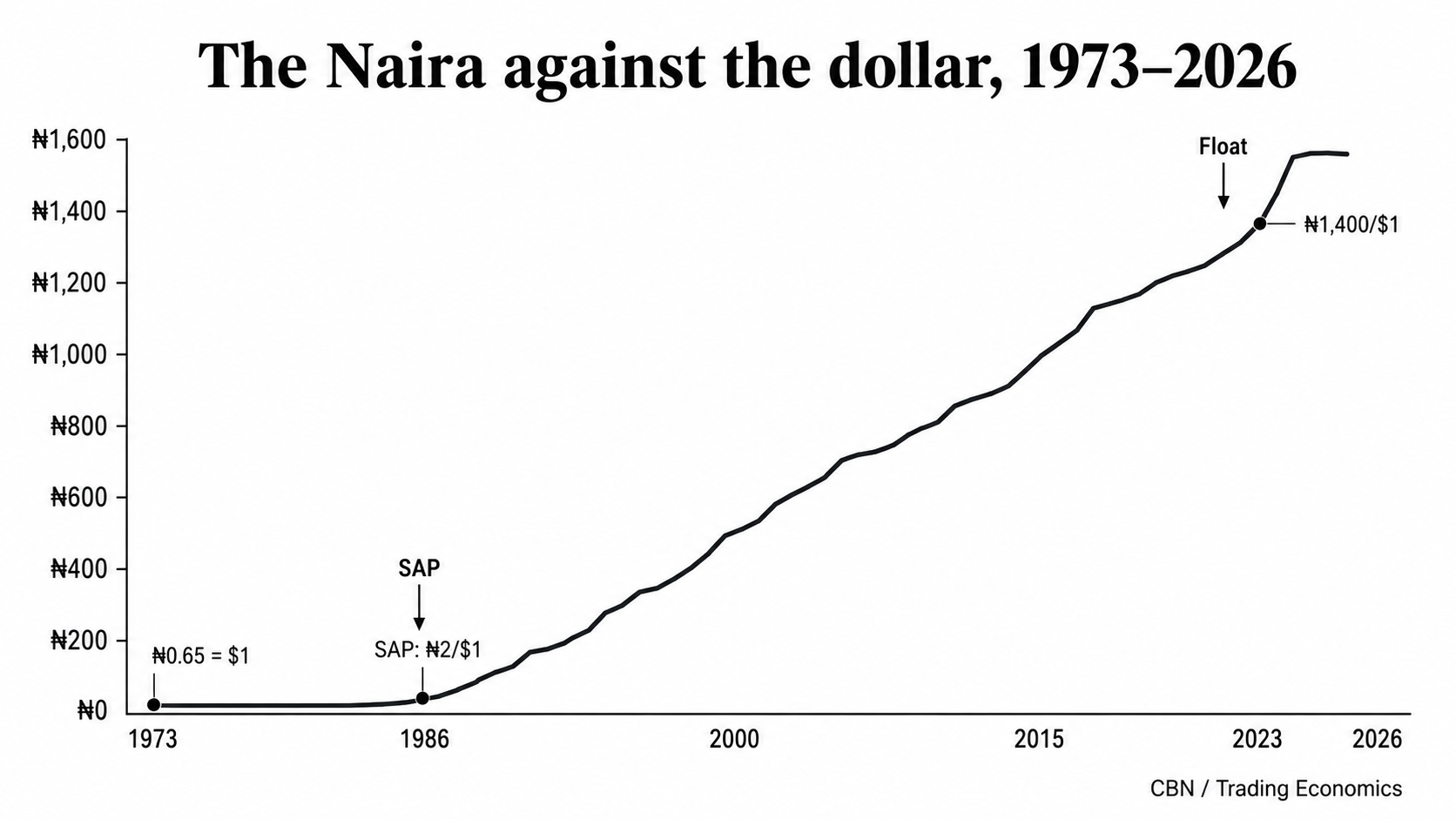
The Naira was worth more than a dollar when it launched in 1973. The Structural Adjustment Programme in 1986 sent it from ₦0.89 to ₦2 per dollar overnight. It never recovered. By 2025, one dollar costs ₦1,600. Every drop on this line is someone's salary, someone's savings, someone's plan that no longer reached.
The Naira went from stronger than the dollar in 1973 to ₦1,600 per dollar by 2025. Source: CBN / Trading Economics.
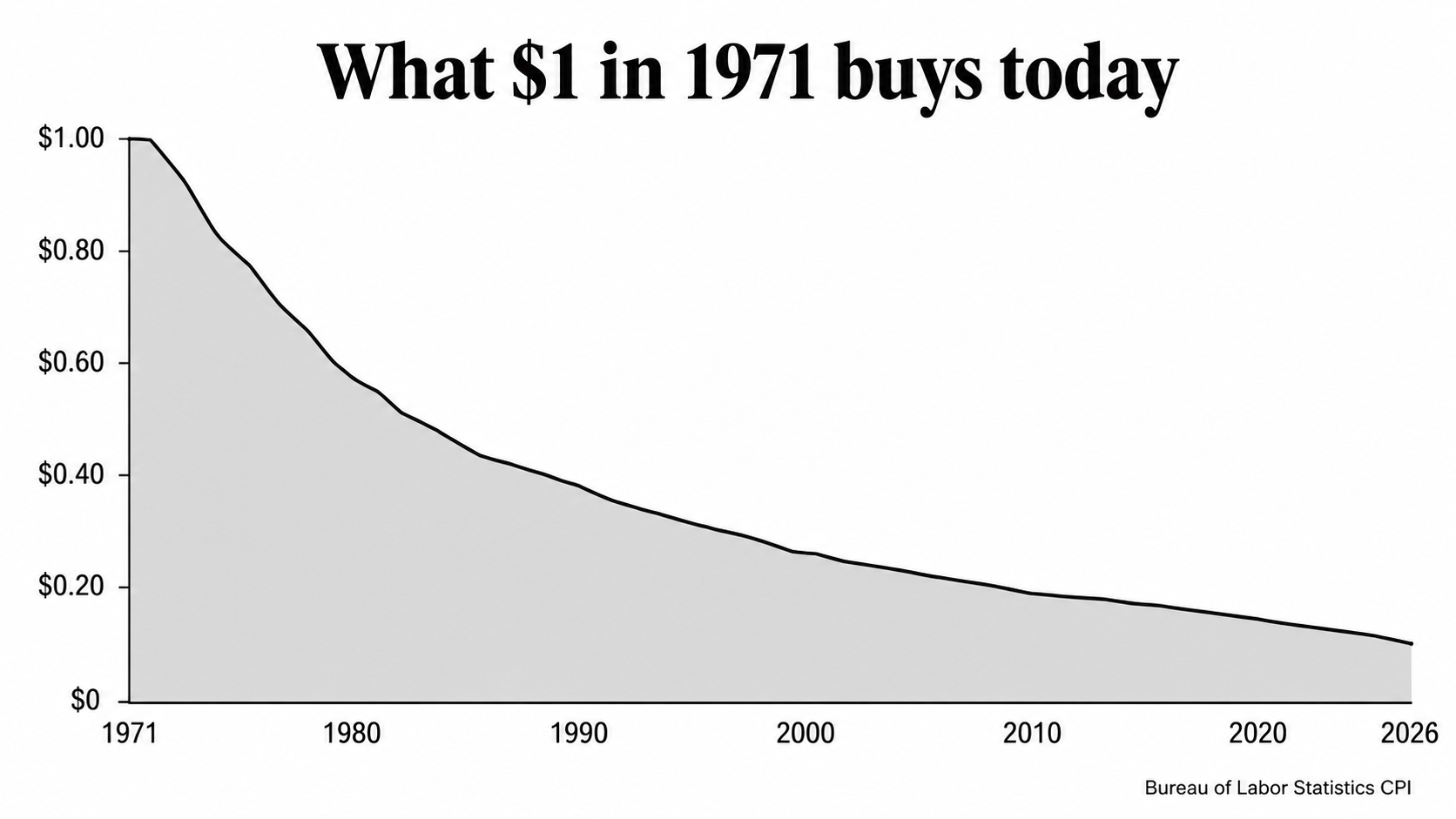
On 15 August 1971, Richard Nixon announced that America would no longer exchange dollars for gold. Every currency on earth became, from that evening, a government promise with no hard anchor. The US dollar has lost roughly 85% of its purchasing power since. This is the currency most Nigerians reach for as a hedge.
The US dollar has lost roughly 85% of its purchasing power since 1971. Source: Bureau of Labor Statistics CPI data.
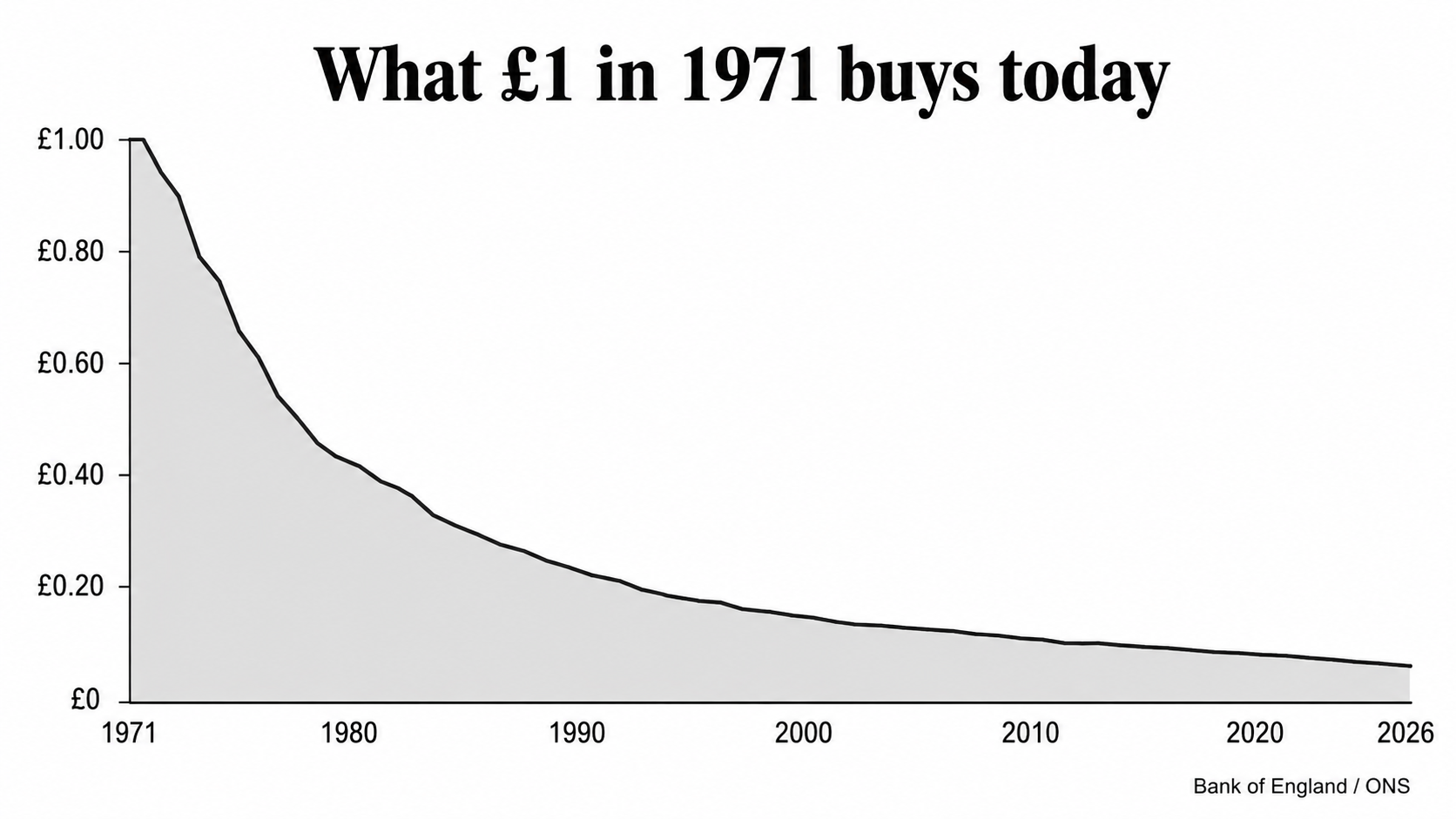
The British pound has lost 94% since 1971. This is the currency Nigeria was originally pegged to. More than the dollar. The most trusted currencies on earth all move in the same direction. The Naira just moves faster.
The British pound has lost 94% of its purchasing power since 1971. Source: Bank of England / ONS.
The difference between the Naira chart and the dollar chart is not the direction. It is the speed. A blowout and a slow puncture both leave you stranded.
The Only Useful Response
The answer is not to stop saving. It is to understand what saving in naira, in a high-inflation economy, over time, actually produces. A naira savings account earning 6% while inflation runs at 16% is not growing. It is losing, with extra steps.
The number in your head was formed in a specific year, under specific conditions. It has been lying to you about your progress ever since. The first step is simply knowing it is there.

Comments